Fireplace Guide
Fireplace terminology, design formats and fuel options can be difficult to navigate at the outset of a project. This guide is intended to bring clarity to the key terms and the thinking behind each choice, covering what suits your space, how the available fuels compare, and where bespoke architectural fireplace design can take a brief further.
Consider it a starting point rather than a definitive answer, with our design team on hand to advise on the right approach for your home or project.
Suspended Fireplace
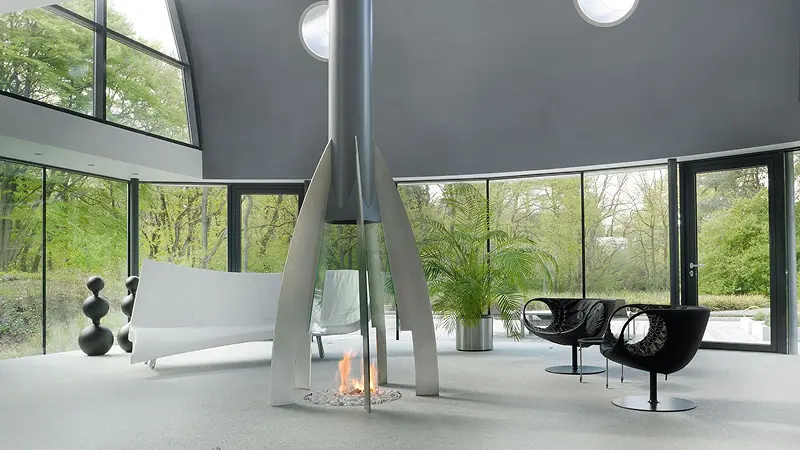
A suspended fireplace is hung from the ceiling or supported by a concealed structural element, creating the impression of a fire that floats within the room. Freed from the wall, it can be viewed from multiple angles and read as a sculptural object in its own right, rather than as a feature contained within the architecture around it. Suspended designs are particularly well suited to open-plan and double-height spaces, where their three-dimensional presence is fully appreciated and sightlines remain uninterrupted.
They are most often specified as architectural focal points rather than primary heat sources. Structural support, flue routing, and ceiling integration require consideration and resolution at an early stage, which is why suspended fireplaces are best developed in close collaboration between the architect, designer, and Modus Fireplaces.
Fuel Options: Suspended fireplaces can be designed to run on gas, wood or bioethanol, each offering a different balance of flame quality, heat output, and installation requirements.
Our design consultants are best placed to advise on the right option for your home, taking into account the architecture, intended use, and the wider scheme.
Glass-Fronted Fireplace
A glass-fronted fireplace is a fire enclosed behind a heat-resistant glass panel, creating a more controlled and efficient combustion system than a traditional open fireplace. By containing the fire behind glass, more of the heat can be directed into the room, making these fireplaces a good option where higher efficiency and stronger heat output are important.
Glass-fronted fireplaces are available as both gas and wood-burning models. Glass-fronted gas fires are typically room-sealed and used with a balanced or concentric flue system, meaning they draw combustion air from outside and expel the combustion gases through the same flue route. This makes them efficient, controlled and well suited to modern homes.
They are commonly available in a wide range of fixed sizes and formats, including wall fires, double-sided fireplaces and, in some cases, suspended designs. Bespoke glass-fronted wood-burning fireplaces can also be designed to suit specific dimensions and architectural requirements.
While glass-fronted fireplaces offer a beautiful flame picture, it is important to consider the heat output carefully, as they can produce a significant amount of warmth. When correctly specified, they provide an excellent balance of visual impact, performance and efficiency.
Fuel Options: behind-glass fireplaces are available as gas, wood, or bioethanol fires, each offering a different balance of flame character, heat output, and installation requirements.
Our design consultants are best placed to advise on the right option for your home, taking into account the architecture, intended use, and the wider scheme."
Wall Fireplace
A wall fire is a fireplace integrated into, or mounted onto, a wall and designed to sit as a defined architectural opening within the surface rather than projecting outward as a stove or freestanding object would. In contemporary interiors, wall fires are most often specified as part of a considered feature wall, joinery run, or media unit, with the aperture proportioned and aligned to the wider composition of the space.
They suit a broad range of projects, from urban flats and new builds to larger residential and hospitality schemes, in part because many modern systems can be installed without a traditional chimney when correctly specified. Successful integration depends on early decisions around aperture size, depth, surround material, and the relationship to adjacent elements such as a television, shelving, or stonework, all of which should be resolved before construction begins.
Fuel Options: wall fires can be designed to run on gas, wood, bioethanol, or electric, each offering a different balance of flame quality, heat output, and installation requirements.
Our design consultants are best placed to advise on the right option for your home, taking into account the architecture, intended use, and the wider scheme
Double-Sided Fireplace
A double-sided fire, also known as a tunnel fireplace, is a single fireplace designed to be viewed from two sides. Typically installed within a wall or architectural divide, it allows the flame to be shared between adjoining spaces, such as a living and dining area, bedroom and bathroom, or an interior room and outdoor terrace.
Beyond its function as a fireplace, a double-sided fire can act as an architectural feature, helping to connect different zones while maintaining openness, light and visual flow. These designs work particularly well in open-plan interiors and larger spaces, where the fireplace can define areas without fully separating them.
Double-sided fireplaces require careful planning at an early stage. The wall construction, flue route, ventilation, heat output and finishes on both sides all need to be considered as part of the wider architectural design. As the heat is shared between two spaces, the specification should balance visual impact with practical performance.
Fuel Options: Double-sided fireplaces can be designed for gas, wood or bioethanol, with each fuel type offering different benefits in terms of flame effect, heat output, efficiency and installation requirements.
Our design consultants can advise on the most suitable option for your home, taking into account the architecture, intended use and overall design scheme.
Bioethanol Fireplace
A bioethanol fireplace is a flueless real-flame system that burns liquid bioethanol in a purpose-designed burner. It does not require a chimney, flue or gas connection, making it useful where a conventional gas or wood fire would be difficult to install.
The absence of a flue does not remove the need for careful specification. Combustion takes place within the room, so room volume, ventilation, burner output, non-combustible materials and clearances must all be matched to the selected system. Fuel should be stored and handled in accordance with the manufacturer's instructions, and the burner must never be refilled while hot or alight.
Bioethanol fireplaces can be developed as wall fires, double-sided fireplaces, suspended designs, fire tables or fully bespoke architectural features. Automatic systems may offer remote control, flame adjustment and integrated safety functions.
Our design consultants can advise on an appropriate burner and enclosure for the architecture, intended use and room conditions.
Focus Creation Fireplace
Focus Creation fireplaces are architect-designed, sculptural fires originating in France and recognised internationally for their suspended, pivoting and freestanding forms. Each model is conceived as a three-dimensional architectural object rather than a conventional appliance contained within a wall.
Because many Focus designs are ceiling-hung or centrally positioned, structural support, flue routing, combustion air, clearances and regulatory requirements need to be resolved early. Modus specifies and installs Focus fireplaces in the UK, coordinating the selected model with the architect, interior designer and wider construction team.
Fuel Options: These vary by model and may include gas, wood, bioethanol or electric holographic systems. For wood-burning models, suitability for smoke-control areas must be confirmed for the precise appliance, configuration and permitted fuel at specification stage.
Line Fire
A Line Fire (also called a linear fire or ribbon fire) is a fireplace or burner design where the flame runs in a single elongated, horizontal line rather than a traditional central or focal flame. The flame is produced along the length of a narrow burner, creating a low, wide band of fire that reads as an architectural element rather than a conventional fireplace centrepiece.
Line fires are typically set into a wall, floor, or plinth, and are valued for their clean, graphic quality. They suit contemporary and minimalist interiors particularly well, and are often specified to run beneath a floating shelf, along a room divider, or as a continuous feature across a wide chimney breast.
In architectural fireplace terms, the line fire sits at the more design-led, specifier-focused end of the market, where the fire is conceived as part of the room's geometry rather than a standalone object.
Fuel Options: Line Fires can be designed for gas or bioethanol, with each fuel type offering different benefits in terms of flame effect, heat output, efficiency and installation requirements.
Fire Pot
Modus Fire Pots are handcrafted outdoor vessels reimagined as bioethanol fire features and occasional furniture. Each pot is filled with decorative stone and fitted with a purpose-designed burner, creating a real flame while retaining the character and craftsmanship of the original vessel.
They are intended primarily as atmospheric design objects for terraces, gardens and courtyards rather than as primary heat sources. A fitted lid allows the fire pot to become an outdoor occasional table when the burner is not in use and has fully cooled.
Fire Pots use bioethanol and therefore require no fixed gas supply or flue. They should still be positioned on a stable, non-combustible surface with appropriate clearances and used in accordance with the burner manufacturer's instructions.
Outdoor Wall Fire
An outdoor wall fire is an architectural fireplace designed for external use and integrated into, or mounted onto, an exterior wall or garden structure. Specified correctly, it extends the principles of an indoor wall-fireplace into the landscape, providing a defined focal point that anchors a terrace, courtyard, or outdoor living area while remaining fully resolved as part of the surrounding architecture.
These fireplaces are most often specified where outdoor spaces are intended for year-round use, such as covered terraces, garden rooms, pool houses, and hospitality settings, where the presence of fire transforms how the space is used through the cooler months. Successful outdoor wall installations require careful consideration of weather exposure, materials, services, ventilation, and clearances, all of which must be coordinated with the wider build and resolved at an early stage to ensure long-term performance and compliance with current UK regulations.
Fuel Options: outdoor wall fires can be designed to run on gas, wood or bioethanol, each offering a different balance of heat output, flame character, and installation requirements.
Our design consultants are best placed to advise on the right option for your home, taking into account the architecture, intended use, and the wider scheme.
Fire Table
A fire table integrates a real flame into the form of an outdoor table, combining an atmospheric fire feature with a practical surface around which seating can be arranged. It is typically used to anchor conversation areas on terraces, roof terraces, gardens and hospitality spaces.
Fuel Options: Fire tables may use bioethanol, a fixed natural-gas or LPG supply, or an integrated gas cylinder where the model is designed for portable use. Bioethanol and portable gas offer greater freedom of position, while a plumbed gas system generally provides the most consistent performance for regular use.
The final choice should account for flame output, fuel storage or services, wind exposure, ventilation, clearances, drainage and the intended use of the tabletop. Dimensions, cladding and surface materials can then be coordinated with the wider landscape and furniture scheme.
Fire Pit
A fire pit is a freestanding outdoor fireplace, usually lower in profile than a fire table and designed to create a defined gathering point within a garden, terrace or landscape scheme. Where a fire table combines flame with a working surface, a fire pit treats the flame itself as the centrepiece, with seating typically arranged around it.
Fuel Options: Fire pits can be designed for wood, gas or bioethanol. Wood provides the most traditional open-fire experience; gas offers controllable ignition and output; bioethanol provides a real flame without fixed gas services. Each option has different requirements for heat, fuel handling, wind, clearances and positioning.
Modus can advise on the appropriate format, fuel and material specification for the architecture, landscape and intended pattern of use.
Outdoor Focus Creation Fireplace
Outdoor Focus Creation Fireplaces adapt the sculptural language of the Focus Creation collection for terraces, gardens and external living spaces. Their suspended or freestanding forms are conceived as architectural objects within the landscape rather than as conventional garden equipment.
Exterior models use materials and finishes developed for outdoor exposure, but they still require careful positioning, a stable non-combustible setting and appropriate clearances. The relationship to seating, wind direction, flue route and weather protection should be considered as part of the landscape design.
Fuel Options: Outdoor Focus models are principally wood-burning and are suited to projects where a statement fireplace is intended to anchor a private terrace, courtyard, pool area or hospitality environment.
Gas
Gas is widely specified for contemporary fireplaces because it combines a real flame with instant ignition, adjustable output and straightforward day-to-day operation. It suits residential and hospitality projects where the fireplace is expected to operate reliably and frequently without the fuel handling associated with wood.
Gas fireplaces may use natural gas or LPG and can be developed as open-fronted, glass-fronted, linear, suspended, double-sided or fully bespoke designs. The gas supply, burner, ventilation and flue or extraction strategy must be coordinated at an early stage so that the appliance can be integrated cleanly within the architecture.
Combustion performance and emissions vary by appliance and installation. The selected system should be specified and commissioned by appropriately qualified professionals in accordance with current regulations and the manufacturer's instructions.
Wood
Wood remains the most traditional fireplace fuel, valued for the quality of its flame, the character of the burn, and the sensory experience that no other fuel fully replicates. Modern wood-burning fireplaces are a considerable advance on the open fires of the past, with sealed, behind-glass systems offering high efficiency, controlled combustion, and significantly cleaner performance than older designs.
Wood is particularly well suited to homes where the ritual of the fire is part of the appeal, and to architectural settings where heat output and presence are both valued, such as large living spaces, country properties, and hospitality interiors where the fireplace anchors the room. Specification needs to be carefully considered: a suitable chimney or flue is essential, ventilation and clearances must be resolved within the architecture, and current regulations, including those relating to emissions and approved appliances, should be addressed at the earliest stage. Wood-burning designs can be specified across wall, double-sided, suspended, and bespoke architectural formats.
Our design consultants are best placed to advise on whether wood is the right fuel for your home, taking into account the architecture, intended use, and the wider scheme
Bioethanol
Bioethanol is a liquid alcohol fuel, commonly produced from plant-derived feedstocks, that is burned in a purpose-designed fireplace burner to create a real flame. A bioethanol fire does not require a chimney, flue or gas connection, which can make it valuable where fixed services or a conventional flue route are not practical.
Combustion still takes place within the room and produces heat, carbon dioxide and water vapour. The appliance must therefore be matched to the room volume and ventilation, with correct clearances, non-combustible materials and operating controls. Fuel should be stored safely and the burner must not be refilled while hot or alight.
Modern automatic bioethanol systems can include remote or smartphone control, flame adjustment and integrated safety sensors. They can be incorporated into wall, double-sided, suspended, outdoor and bespoke architectural fireplace formats.
Electric
Electric fireplaces, particularly the latest holographic systems, offer a substantially more convincing flame image than traditional illuminated electric fires. Carefully controlled light, reflection and three-dimensional imagery can create depth and movement without combustion.
Because there is no live fuel or flue gas, electric and holographic fires require no chimney, flue or gas supply. They are useful where structural, servicing or regulatory constraints make gas, wood or bioethanol impractical, and where visual atmosphere is more important than strong heat output.
Electric flame systems can be integrated into suspended, wall-mounted, glass-fronted and bespoke architectural fireplaces. The electrical supply, ventilation around equipment, access for maintenance and any supplementary heating function should still be coordinated during design.
Twin Wall Flue
A twin wall flue is a prefabricated metal flue system used to safely remove combustion gases from a fireplace to the outside. It is constructed from two layers of metal with an insulated cavity between them, helping to keep the flue gases warm while significantly reducing the surface temperature of the outer pipe.
Twin wall flues are commonly used where there is no existing chimney, or where a traditional masonry chimney is not suitable. Because the system is formed from modular flue sections rather than a large chimney breast, it can take up far less space and offers greater flexibility in how the fireplace is positioned and routed through the property.
Twin wall insulated flue systems can be used with a range of open combustion appliances, including gas and wood-burning fireplaces, provided the system is correctly specified, installed and matched to the appliance. They offer a practical, efficient and discreet alternative to a conventional chimney, particularly for modern fireplace installations.
Balanced Flue / Concentric Flue
A balanced flue, also known as a concentric flue, is a room-sealed flue system used principally with glass-fronted gas fireplaces. The firebox is sealed from the room, so combustion air is drawn from outside rather than from the living space.
The system normally consists of two concentric passages: one supplies outside air to the burner and the other carries combustion gases to the exterior. Both functions are handled through the same flue route, allowing controlled and efficient operation.
Balanced-flue appliances can be useful where there is no traditional chimney or where a room-sealed installation is preferred. Permitted flue lengths, terminals and offsets depend on the selected appliance and must follow the manufacturer's specification.
Fan Assisted Fire
A fan-assisted flue system, often referred to as a power flue, uses a mechanical fan to help draw combustion gases safely through the flue and discharge them to the outside. This can be required where a fireplace is particularly large, where the flue route is complex, or where a natural-draught chimney is not able to provide sufficient pull.
Unlike a traditional flue, which normally needs to rise vertically with only limited offsets, a fan-assisted system can allow far greater flexibility in the flue design. In certain gas fireplace installations, this can make it possible to run sections of flue horizontally, route the system through more challenging parts of a building, or position a fireplace where a conventional chimney would not have been practical.
Power flue systems are especially useful for larger bespoke gas fires, including long linear fireplaces where additional extraction is needed to manage the volume of combustion gases. They can also be used with some wood-burning fireplaces to improve chimney draw and help reduce smoke returning into the room, subject to the correct specification.
When designed correctly, a fan-assisted flue system provides a safe, controlled and versatile solution for fireplace installations where a natural-draught chimney would be unsuitable or too restrictive.
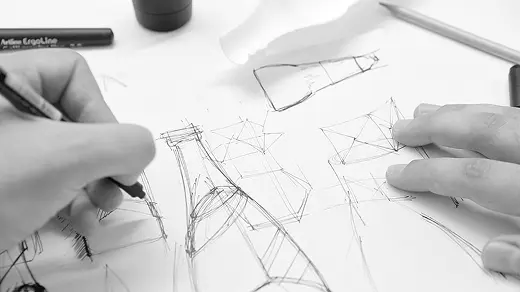
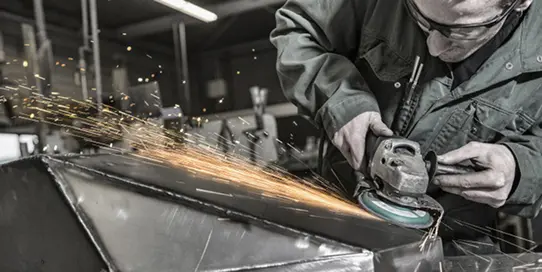
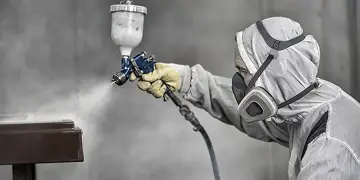
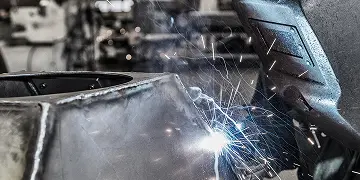
Architectural fireplaces, designed without precedent
If you can conceive it, we can deliver it. That is what Modus does best. Working closely with our in-house design team, and in collaboration with Europe's leading manufacturers, we develop fireplaces that respond precisely to the architecture, materiality, and intent of each project. The result is a fireplace tailor-made for its setting, and for no other.
Every element is open to specification, from stone, metal, and finish through to proportion and detailing.
Each fireplace is engineered in close partnership with Europe's leading manufacturers, with structural detailing and combustion performance resolved as part of the design.
We work as an extension of the project team, from concept through to commissioning, so the fireplace sits within the architecture rather than against it.